

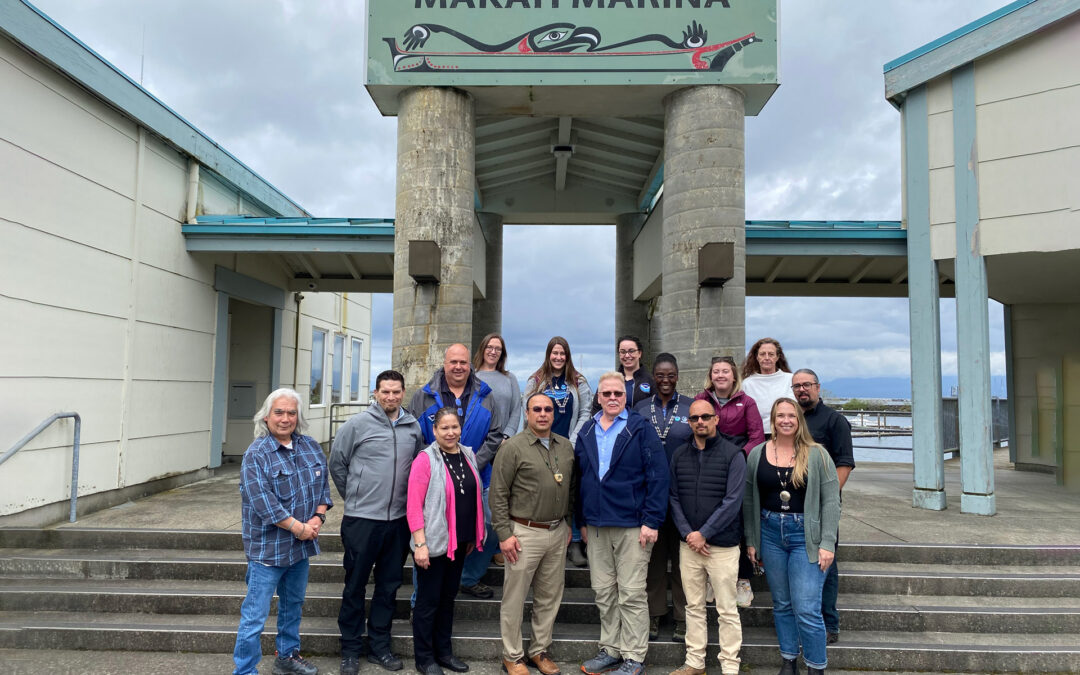
The Makah People of Neah Bay, Washington are made up of roughly 1,500 people. Their prehistoric population is estimated to stand somewhere between 2,000 and 4,000. But they have always thrived in the area, largely through their fishing. Located in the Northwestern most corner of Washington, about 50% of their economy comes from what they catch.
So, in 2013, when the causeway of their commercial dock collapsed under the weight of a forklift and created a catastrophic failure in the structure, the need for assistance was immediate. The dock could no longer bear the weight of motorized equipment needed for the loading of ice and fish. Originally constructed in 1952, and built from concrete and creosote, the dock had seen a lot of use and was in disrepair for years.
Planning and construction on a new $13.8 million dollar dock began almost immediately.
It’s going to be a huge plus to have all the catch come in at one dock
Michael Lawrence
Dock Manager
The new dock construction would serve as a large improvement to the community, and would help to “pay for itself rapidly,” as reported by the website for the Northwest Indian Fishing Commission (NWIFC).
The new construction was made stronger, of concrete and steel. As the only dock within a 70 mile radius that could unload fish and other goods from ships, it was a great boon to the area. It was built with warehouse space totalling 5,600 square feet and three large cranes used to unload ships. 59 temporary jobs were created by the construction.
The project’s financing came from multiple sources, including a $1 million grant from the U.S. Economic Development Agency, Tribal Funds, and New Markets Tax Credits brought to the project by Grow America and Wells Fargo. The project moved quickly and took only 9 months to complete, thanks to the quick action of the Tribe and its development partners.
“It’s going to be a huge plus to have all the catch come in at one dock,” dock manager Michael Lawrence said before the opening of the new dock. “We’ve invited a flotilla of boats to tie up at the new facility as part of the celebration.”
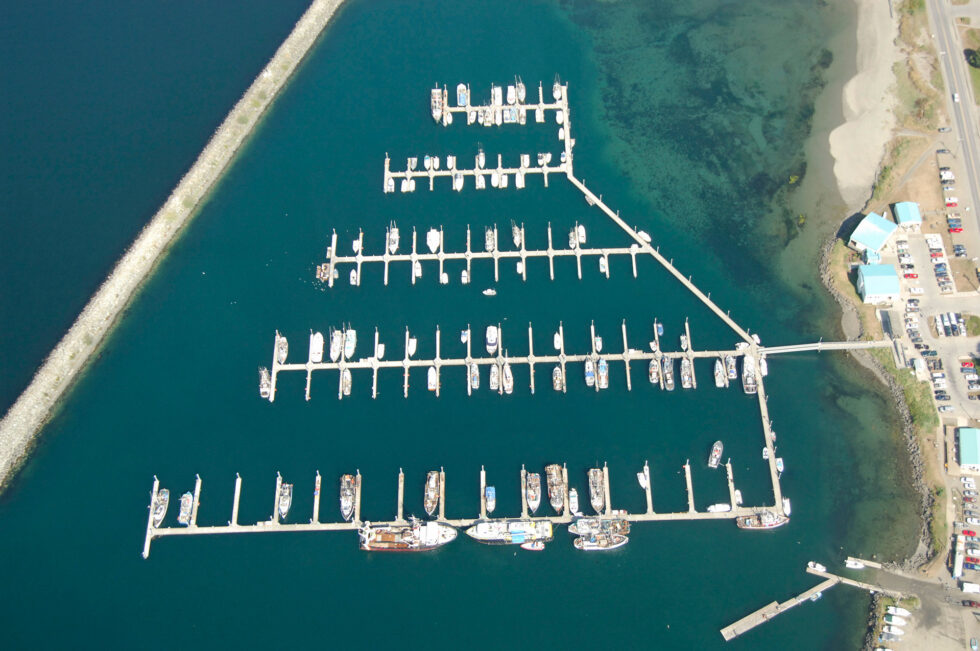
The result is a brand new facility that will be used by over 90 different small businesses, mostly minority-owned fishing operations, who depend on this dock for their livelihood. Those businesses employ more than 400 full time employees. Tribal members depend on the revenue from the dock. Approximately $7-10 million worth of fish cross the dock every year.
The State of Washington also depends on the dock to launch emergency vessel rescue and spill response operations in the area. A $1.1 million grant from the US Department of Transportation was approved to fund the second part of the project: a longer dock section to prepare the area for oil spill response and prevention.
This crucial emergency dock section is a massive improvement, as the waterway is where the Strait of Juan de Fuca and the Pacific Ocean meet. Washington State relies on it to provide assistance during emergencies. Each year, fuel barges, commercial cargo ships, oil tankers, fish-processing vessels, and passenger ships transit the Strait about 3,000 times on their way to and from Washington ports. And between 1999 and 2014, Neah Bay’s emergency tugboat aided 49 ships that were experiencing emergencies.
But having a dock dedicated to the oil spill emergency response vehicles means they can all stay stationed in one place, and deployment is easier than ever. They’ve even established a crane on the new dock specifically for the industrial lifting that is needed to assist in the deployment of oil spill equipment.
The crane can lift 10 tons and it was mostly with oil spill response in mind
Michael Lawrence Dock Manager
Wells Fargo’s Community Lending & Investment (CLI) group also provided the Makah community with a $500,000 Federal Home Loan Bank Affordable Housing Subsidy Grant. Through this grant, the Makah Tribe gained low-income housing support. They received 21 affordable-rate apartments, as well as optional assistance for formerly homeless tribal members.
With the rebuilding of this dock, the Makah Tribe gained improved, up to date improvements to their community, and Washington State is better prepared for potential disaster relief.
From the ground
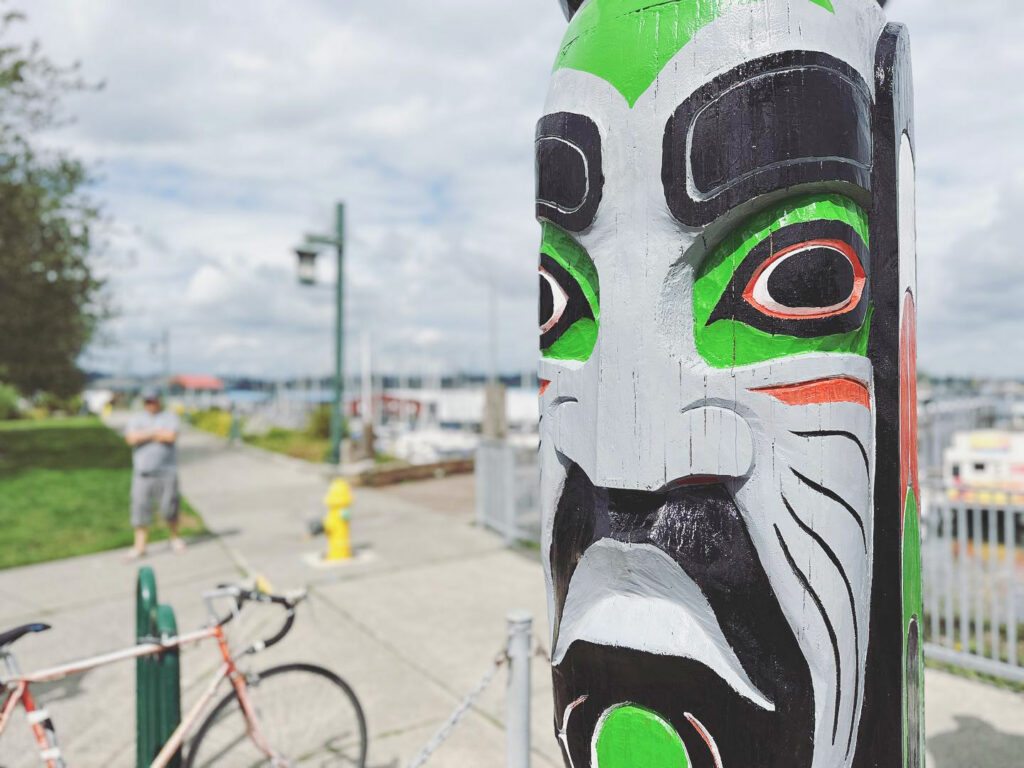
A 1989 totem pole carved by Frank Smith of the Makah Tribe was restored to its original shape and color by his grandson, Bill Martin Jr.
Reference